:

If you click on objects on the picture you'll access detailed information
The Garage - The Car
The car‘s maintenance
- Ideally you should take your car once a year to the dealership for a complete overhaul.
- It’s a good idea to check the tire pressure regularly. If the correct air pressure is maintained the tires will wear less and you save fuel.
- Another good idea is to prevent oil and dust sticking to the car by waxing it a few times a year. A clean car saves fuel as the friction from the dirt has its effects in the long run. Also see Varnish and its maintenance.
- Eco-friendly and eco-labeled cleansers for cars are available. Cleansers based on propylene glycol rather than ethylene glycol are better because they are less toxic. Biological cleansers are an eco-friendly solution. There is a great selection of eco-labeled cleaners available today.
- A fan inside the garage is necessary to clear the air. This is especially useful when the car is wet to prevent rust.
A few safety measures
- It is dangerous to store items or trash inside the car, as it can get tossed about in a crash and cause great damage.
- Studded tires are not necessary except in extreme cases.
- It is advisable to remove roof racks and when you don’t need them. Racks increase air resistance and therefore fuel consumption equal to one liter per 100km.
- Drive within legal limits. A car driving at 100km/hour instead of 80km/hour burns 20% more fuel. Keep in mind if you are in such a hurry to catch the next red light that the greater part of all fuel consumption in urban driving goes into accelerating. Regarding fuel consumption, as even a speed as possible is optimum.
Do you really need a car?
If you are wondering about buying another car, consider first whether or not you really need it. Using taxis can often be the preferable choice.
Example: An extra car for the home costs around 900.000 ISK a year [2010] in insurances, capital consumption, gas, etc. If a couple can drive each other to work, and on their way home one of them picks up the children while the other takes a taxi for 2000 ISK the example calculates like this: Most people work 220 days a year so the taxi costs about 440.000 ISK during that time. When it is necessary, it is possible to rent a car, which is quite cheap nine months of the year. Indeed you can take a lot more taxis or simply enjoy yourself somehow for the 460.000 ISK you have left.
Also it is healthy and enjoyable to walk short distances.
Environmentally friendly cars
It is, in a certain way, a paradox to talk about ‘environmentally friendly’ cars and more accurate to say ‘less environmentally harmful’ or at best ‘sustainable’ as no car can truly be said to be friendly towards the environment. In order to assess a car’s environmental impact, it is necessary to take into account its entire lifespan. This includes the gathering and transport of raw materials needed to manufacture it, energy and chemical use during its production, transporting the car, effects of driving it throughout the time it is in use, durability and finally its disposal.
The city of Reykjavik defines sustainable cars according to their fuel consumption and type of fuel. According to this, 22 cars on the Icelandic market qualify as sustainable. View a list of the cars at Bílgreinasambandið.
Hybrid cars are powered by a combination of a petrol engine and an electric motor in order to considerably reduce the emission of polluting gases in comparison with petrol powered cars of equal size. The hybrid car, Toyota Prius, was selected as the car of the year in Europe in 2005. Today over 200 such cars are in use in Iceland. Toyota claims that 90% of the car is recyclable. The hybrid car, Honda Civic, is also available in Iceland. Also available are hybrid family cars and small jeeps from Lexus.
Methane-cars are an exception in that they can safely be considered ‘environmentally friendly’ during their time of use. Firstly, its emissions are completely free of CO2 and secondly, they consume methane gas, which is an especially harmful greenhouse gas. Almost any car can be converted into one fueled by methane. 555 cars drive on methane in Iceland today [July 2011] and several companies offer the service of methane convertion.
Diesel-engine cars can be convenient if they are equipped with a filter to capture hazardous fine soot particulates and PAH particles. But diesel-engine cars are still big polluters and no better than petrol-engine cars unless they are also equipped with a catalytic converter along with the aforementioned filters. Note that the filter is self-cleaning.
Other solutions such as the plug-in hybrid electric car are in development and not quite yet on the market. Then we can simply recharge the car overnight for the coming day.
Bio-diesel is new to the discussion in Iceland.
A few hydrogen-cars are in use as part of the hydrogen project. The first ethanol pump did open in 2008, but at the moment there are only 2 such cars in use in the country. The development is considerably increasing its pace.
Fortunately both producers and consumers are awakening to the importance of this issue. The goal of course should be that sustainable cars become the rule rather than the exception as they are now.
Can you manage with an electric-car?
They are usually small and driven within a small range but on the other hand they are cheap to maintain and the most environmentally friendly vehicles available today. A few such cars are in use now in the country. Note also that electric bicycles are also available.
Choose the smallest car
Don’t choose a bigger car than you need. Think about the environment and chose the smallest car you can get by on. Most people choose cars that fulfill all their needs all the time. This means that people are buying a car that is in full use 5 days of the year but in partial use 360 days. That’s just bad economics. Buy a car that suits you 360 days a year and find cheaper solutions than buying a bigger car for those 5 days.
Using the same car
Find out if you can get a lift to work with a co-worker. The more people who carpool the better for the environment and it can also be much more enjoyable.
Using telecommunications instead of the car
If you use the phone and E-mails more you‘ll be able to use the car less. Drive less by using the Internet. By using E-mails and holding distance meetings it is possible to considerably reduce traveling. Shopping in an online store is really very environmentally friendly.
details
Náttúran er
29. February 2012 14:57
Origin: Náttúran.is
Hlaupársdagur
Hann er nú 29. febrúar, þegar talan 4 gengur upp í ártalinu nema aldamótaár. Þá þarf talan 400 að ganga upp í. Hlaupársdagurinn var áður oft talinn 24. eða 25. febrúar. Víða um lönd hafa menn haft nokkra ótrú á hlaupársdeginum, mánuðinum eða jafnvel hlaupárinu öllu. Þá átti allt að ganga öfugt við það sem venjan bauð og flestar fyrirtektir að misheppnast. Ekki verður neins vart í þessa átt hérlendis fyrr en á síðari tímum og þá einungis varðandi þann gamansið, að konur megi biðja sér karlmanns á hlaupárdeginum. Hann má þá ekki neita, en getur þó keypt sig lausan með gjöf eða gjaldi.
details
Árni Björnsson
29. February 2012 00:00
Origin:
Ferðamálastofa boðar til kynninga á Vakanum
Nýju gæða- og umhverfiskerfi fyrir íslenska ferðaþjónustu, sem ber heitið Vakinn, verður formlega ýtt úr vör í Sunnusal Radisson Blu Hótel Sögu þriðjudaginn 28 febrúar kl 14:30. Í framhaldinu verða kynningarfundir haldnir víða um land.
Hagsmunaaðilar í ferðaþjónustu hafa um nokkurt skeið unnið að þróun metnaðarfulls gæðakerfis fyrir íslenska ferðaþjónustu og binda aðstandendur kerfisins miklar vonir við að VAKINN muni efla gæði og öryggi í ferðaþjónustu á Íslandi með handleiðslu og stuðningi, ásamt því að byggja upp samfélagslega ábyrgð ferðaþjónustufyrirtækja.
Vakinn er afsprengi þróunarverkefnis sem iðnaðarráðuneytið fól Ferðamálastofu og Nýsköpunarmiðstöð Íslands að vinna að. Verkefnið er unnið í náinni samvinnu við Samtök ferðaþjónustunnar og Ferðamálasamtök Íslands og þannig hefur skapast breið samstaða innan ferðaþjónustunnar um þennan mikilvæga málaflokk.
Ávörp á fundinum á Hótel Sögu flytja:
- Ólöf Ýrr Atladóttir, ferðamálastjóri
- Oddný Harðardóttir, iðnaðarráðherra
- Árni Gunnarsson, formaður Samtaka ferðaþjónustunnar
- Unnur Halldórsdóttir, formaður Ferðamálasamtaka Íslands
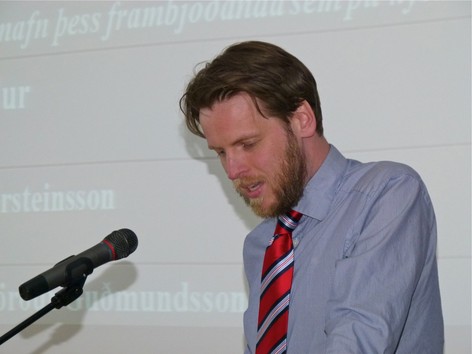
- Stefán Gíslason, umhverfisstjórnunarfræðingur
Heimasíða Vakans, vakinn.is, verður opnuð á fundinum.
Nánari upplýsingar um Vakann hér.
Kynningarfundir Vakans:
2. mars Ísafjörður
5. mars Akureyri og Varmahlíð
6. mars Egilsstaðir
7. mars Höfn í Hornafirði og Kirkjubæjarklaustur
13. mars Stykkishólmur
14. mars Selfoss og Reykjavík
Dagskrá kynningarfunda:
- Ávinningur af Vakanum
- Umhverfiskerfi Vakans
- Gerð öryggisáætlana
- Áhættumat í ferðaþjónustu
- Rekstur og stjórnun
- Stuðningur og fylgigögn Vakans
Nánari upplýsingar um staðsetningu funda á hverjum stað verða birt síðar á vef Ferðamálastofu.
details
Ferðamálastofa
28. February 2012 10:03
Origin: Ferðamálastofa
Green Map of Reykjavík now awailable in a printed version

The Green Map of Reykjavík is a joint international project of Nature.is, the Green Map® System, the city of Reykjavík and the University of Iceland. The goal of Green Maps all around the world is to make eco-friendly options in the fields of culture, commerce and travel services more visible and accessible to all. Green maps have been developed in over 600 municipalities, cities and neighborhoods in 55 countries. Iceland is the first country which classifies the whole country according to the Green Map system.
The printed edition Green Map of Reykjavík is the first of its kind here in Iceland and is based on the online version Green Map of Iceland here on www.nature.is which covers the whole country of Iceland with over 3.000 registrations in 100 categories.
Green Map is a living system and adjusts itself to the changes taking place in society. It is the hope of the publisher that green maps will become entirely unnecessary within a few years as green thinking will have become the rule, and not the exception, as it is now. Until then everyone is free to register on the Green Map of Reykjavík and the Green Map of Iceland as long as the activities of the person/company in question meets the conditions and criteria that are inherent in the Green Map system.
The Green Map of Reykjavík is labeled by the Nordic Eco-label the Swan, printed by the Eco-labeled printer Oddi.
The Green Map of Reykjavík can be picked up free of charge at the Visit Reykjavik Info Centre at Aðalstræti 2 or be ordered on the Nature.is website for the cost of packaging and delivery. Order here.
The Green Map of Reykjavík is designed by Guðrún A. Tryggvadóttir & Signý Kolbeinsdóttir.
details
Guðrún Arndís Tryggvadóttir
27. February 2012 13:42
Origin: Náttúran.is
Náttúruverndarsamtök Suðvesturlands skora á þingmenn að bjarga Reykjanesskaga
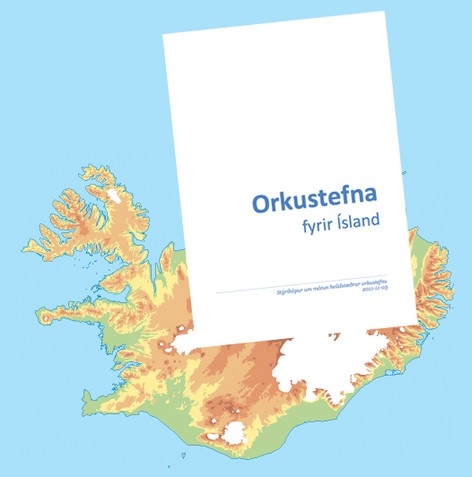
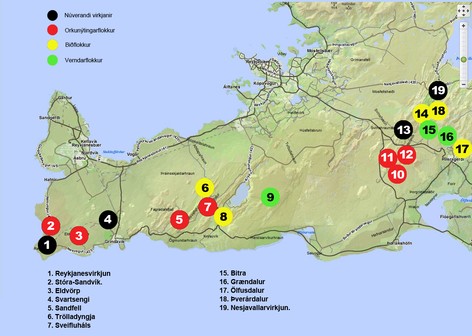
Náttúruverndarsamtök Suðvesturlands hafna því alfarið að nánast allt suðvesturhorn landsins verði gert að einu samfelldu orkuvinnslusvæði eins og gert er ráð fyrir í drögum að þingsályktun að Rammaáætlun. Samtökin skora á þingmenn Suðurkjördæmis, Suðvesturkjördæmis og Reykjavíkurkjördæmanna að koma í veg fyrir að mikilvægum útivistarsvæðum og náttúruperlum verði fórnað undir orkunýtingu sem muni t.d. stórskaða möguleika til uppbyggingar ferðaþjónustu á svæðinu.
Náttúruverndarsamtök Suðvesturlands hafa sent öllum þingmönnum kjördæmanna bréf þessa efnis.
Af þeim 19 virkjunarkostum á Reykjanesskaga, sem fjallað er um í drögunum, fara einungis þrír í verndarflokk. Fjögur svæði hafa þegar verið virkjuð, sjö önnur féllu í orkunýtingarflokk. Samtals fara því ellefu svæði undir orkunýtingu. Fimm svæði fara í biðflokk en gera má ráð fyrir að flest þeirra fari í orkunýtingu síðar. Í tillögunni er t.d. kveðið á um að Austurengjahver í Krýsuvík og Trölladyngja fari í orkunýtingu verði önnur svæði í Reykjanesfólkvangi virkjanleg. Á þessu má sjá að náttúruvernd á suðvesturlandi fer verulega halloka í Rammaáætlun, að óbreyttu.
Reykjanesfólkvangi, einu vinsælasta útivistarsvæðinu á suðvesturhorni landsins, verður breytt í iðnaðarsvæði fari svæðið í orkunýtingu eins og gert er ráð fyrir í drögunum. Slíkt er algjörlega óásættanlegt nú á tímum þegar mikilvægi ósnortinna náttúrusvæða í grennd við þéttbýli hefur aldrei verið meira.
Sem fulltrúum náttúruverndarsamtaka er okkur tvennt efst í huga, annarsvegar náttúruvernd og hinsvegar heilsa og vellíðan landsmanna. Geyst hefur verið farið í virkjun jarðhitans á Hellisheiði með vandamálum sem ekki hefur verið unnt að leysa með viðunandi hætti. Brennisteinsvetnismengun er of mikil og svæðið leikur reglulega á reiðiskjálfi með tilheyrandi óþægindum fyrir íbúa Hveragerðis.
Hver og einn á að fá notið ósnortinnar og heilnæmar náttúru, auk þess sem dýra og jurtalíf skal njóta fullrar verndar. Á Suðvesturlandi býr yfirgnæfandi meirihluti landsmanna, landshlutinn nær þó ekki 3% af heildarflatarmáli Íslands. Það er kunnara en frá þurfi að segja að ágengni af ýmsu tagi er mikil gagnvart náttúru á Suðvesturlandi og þykir mörgum, þar á meðal okkur, að mál sé að linni og snúið skuli til betri vegar.
Stjórn Náttúruverndarsamtaka Suðvesturlands.
details
Ellert Grétarsson
27. February 2012 11:22
Origin: Náttúruverndarsamtök Suðvesturlands

E -
Sláið inn númer E-efnis eða upphaf heitis, veljið úr listanum og smellið á sækja.
Events calendar
| sun | mán | þri | mið | fim | fös | lau | |
|---|---|---|---|---|---|---|---|
| 28 | 29 | 30 | 01 | 02 | 03 | 04 | may |
| 05 | 06 | 07 | 08 | 09 | 10 | 11 | may |
| 12 | 13 | 14 | 15 | 16 | 17 | 18 | may |
| 19 | 20 | 21 | 22 | 23 | 24 | 25 | may |
| 26 | 27 | 28 | 29 | 30 | 31 | 01 | jun |
| 02 | 03 | 04 | 05 | 06 | 07 | 08 | jun |
| 09 | 10 | 11 | 12 | 13 | 14 | 15 | jun |
| 16 | 17 | 18 | 19 | 20 | 21 | 22 | jun |
| 23 | 24 | 25 | 26 | 27 | 28 | 29 | jun |
| 30 | 01 | 02 | 03 | 04 | 05 | 06 | jul |
thursday 23. may
00:00 - 11:00
Sáðalmanak: Rót
See article: Sáðalmanak fyrir maí 2013
12:00 - 19:00
Sáðalmanak: Blóm
See article: Sáðalmanak fyrir maí 2013
19:00 - 23:59
Sáðalmanak: Óhagstætt
See article: Sáðalmanak fyrir maí 2013
20:00 - 22:00
„Do the Math“ eftir 350.org
See article: „Do the Math“ eftir 350.org
20:00 - 22:00
„Do the Math“ eftir 350.org
See article: „Do the Math“ eftir 350.org


Náttúran.is á Facebook.